






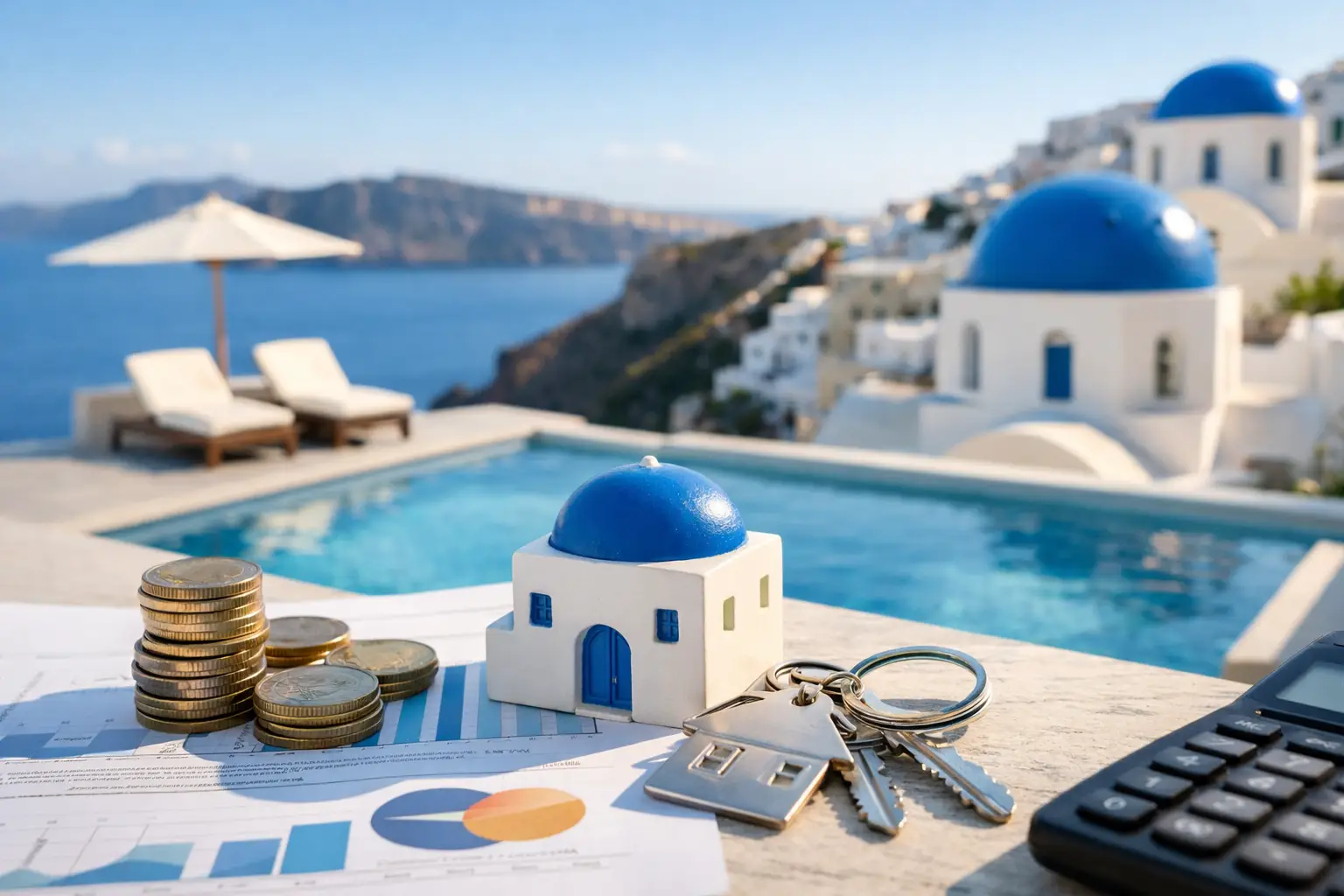
How to Earn Rental Yield From Greek Property
A seafront apartment should do more than provide a beautiful place to stay. For internationally mobile investors, the question is how to earn rental yield while holding an asset that also supports family security, European residency, and long-term wealth preservation. In Greece, the strongest opportunities come from matching the right property, location, rental strategy, and ownership structure from the start.
Rental income is never just about buying at the minimum qualifying price. It is about selecting a property guests want to book, understanding the real costs of ownership, and having professional support in place when you are outside the country. For non-EU buyers, a qualifying Greek property can bring two outcomes together: an income-producing Mediterranean asset and a route to permanent residency through the Greek Golden Visa Programme.
Start With the Rental Yield Calculation
Rental yield measures the annual income a property produces relative to its purchase price. It gives investors a practical way to compare properties before emotion, views, or residency benefits influence the decision.
The basic gross yield formula is straightforward:
Annual rental income ÷ total property purchase cost × 100 = gross rental yield
If an apartment generates €15,000 in annual rent and your total acquisition cost is €300,000, the gross rental yield is 5%. This is useful as a starting point, but it is not the final number that matters.
Net yield shows what remains after the costs of generating that income. Depending on the property and rental model, these costs may include property management, cleaning, maintenance, insurance, utilities, local taxes, platform fees, vacancy periods, and accounting support. A property with a higher advertised gross yield can produce less cash in your account if its running costs are poorly controlled.
For an investor buying from abroad, the right question is not simply, “What yield is possible?” Ask, “What yield can this property reasonably deliver after professional management and realistic operating costs?” That distinction protects capital and leads to better decisions.
Choose a Location That Produces Demand
A rental property earns income only when people want to stay there. Greece has global appeal, but demand varies significantly between a crowded city neighborhood, a remote island, and a well-connected coastal destination.
Aegina Island offers a particularly compelling balance. It provides the sea, village atmosphere, dining, and relaxed lifestyle that travelers expect from Greece, while remaining close to Athens and accessible from the mainland. This proximity can widen the guest base beyond peak summer vacationers. It can appeal to international visitors, Athens residents seeking a weekend break, families, and professionals looking for a quieter stay near the capital.
For a premium apartment, proximity to the waterfront matters because it supports both nightly rates and resale appeal. Guests pay for convenience, views, walkability, and a sense of place. A property that requires a long drive to the beach may cost less to buy, but it can be harder to market and may command lower rates.
Location should also be assessed through practical details: ferry access, parking, condition of nearby roads, grocery and restaurant access, surrounding development, and whether the apartment is usable across more than one season. The best rental investment is rarely the most isolated or the most heavily promoted. It is the one with clear, repeatable reasons for guests to choose it.
Buy for the Guest, Not Only for the Investor
A residence may qualify for the Greek Golden Visa, but qualification alone does not guarantee rental performance. To earn rental yield consistently, choose a property with features that make booking easy.
A well-designed apartment with a sea view, outdoor space, modern finishes, strong natural light, reliable air conditioning, and practical bedroom capacity can appeal to a broader market. Families and small groups often favor apartments that offer privacy, a functional kitchen, and room to stay for several nights rather than just a weekend.
The layout matters more than excessive square footage. An apartment that sleeps four or six guests comfortably may outperform a larger property with inefficient rooms. High-quality photography, tasteful furnishing, fast internet, and dependable housekeeping are not optional details in the short-term rental market. They directly affect reviews, occupancy, and pricing power.
There is also a trade-off between personal use and revenue. If you reserve the most popular summer weeks for your own family, your annual rental income may be lower. That does not make the investment weaker. It simply means the return includes lifestyle value as well as financial income. Be clear about your priority before choosing the rental strategy.
Set a Strategy Before You Purchase
The answer to how to earn rental yield is not always short-term rental. Different strategies suit different investors, properties, and levels of involvement.
Short-term stays can produce stronger gross income in high-demand coastal locations, particularly when the property is professionally marketed and maintained. They also require active operations: guest communication, check-in coordination, cleaning, pricing adjustments, calendar management, and compliance with applicable local rules.
Longer stays can offer more predictable occupancy and less operational intensity. This may suit investors who value stable income, reduced turnover, and lower management demands. However, the achievable monthly rent may be lower than seasonal short-term income during strong periods of demand.
A hybrid approach can work well for an Aegina apartment. The owner may use selected dates, target holiday guests during peak months, and seek longer bookings during shoulder seasons where demand supports them. The right model depends on expected occupancy, local market conditions, personal-use plans, and the management team available to operate the property.
Before committing funds, request a conservative income projection rather than relying on best-case seasonal rates. A credible projection should show assumed nightly or monthly rates, expected occupancy, management costs, cleaning costs, annual maintenance allowance, and periods when the property may be vacant. Conservative assumptions create room for upside. Aggressive assumptions create disappointment.
Protect Yield Through Professional Management
Distance should not prevent ownership, but it must be managed properly. Many overseas investors lose income not because they bought the wrong property, but because no one is accountable for daily operations.
A capable local management arrangement can handle guest screening, calendar updates, cleaning inspections, emergency repairs, utility oversight, and guest reviews. This service has a cost, yet it can be a sensible investment when it protects the property’s condition and improves booking performance.
Ask direct questions before appointing a manager. How are rates set and adjusted? Who approves maintenance spending? How quickly are guest issues handled? What reporting will you receive each month? Are cleaning and linen charges included in the fee or billed separately? Clear answers prevent surprises after purchase.
You should also create a reserve for repairs and replacements. Coastal properties benefit from regular care because salt air, sun exposure, and frequent guest use can accelerate wear. Setting aside part of rental income each year helps preserve both the property’s appeal and its long-term resale value.
Keep Residency and Investment Goals Aligned
For many non-EU buyers, rental yield is one part of a broader decision. A qualifying Greek property purchase at the applicable investment threshold can support an application for Greek Golden Visa residency, extending coverage to eligible family members under the program’s rules. This adds practical value beyond the apartment itself: a secure European base, access to Greece, and mobility within the Schengen Area subject to applicable travel rules.
The residency process should be coordinated with the property purchase from the beginning. Legal checks, tax identification, notary procedures, payment documentation, and application preparation all need to be handled carefully. A structured process reduces delays and gives the investor confidence that the property and residency objectives are moving forward together.
Mayas Development IKE supports buyers through this combined path, pairing qualifying seafront property opportunities on Aegina with coordinated Golden Visa guidance. For investors, the advantage is clarity: one purchase can be planned around ownership, income potential, and residency for the family rather than treated as separate projects.
Focus on Return You Can Actually Keep
A 5% annual yield can be an attractive target, but it should be understood as an investment objective supported by the right property and operating plan, not as an automatic result. Market demand changes, maintenance is real, and rental rules or tax obligations must be followed. Premium property selection and professional oversight reduce risk, but they do not remove it.
The most valuable Greek property investments are built for more than a single season. Choose an apartment that your family is proud to own, that guests are willing to pay for, and that fits a properly documented residency strategy. When the view, the location, the management, and the legal structure are working together, rental income becomes part of a much larger European opportunity.